Pakistan and China have formally activated their Joint Border Commission to manage practical issues along their shared frontier. The commission was created under the 2013 China-Pakistan Agreement on the Boundary Management System, and its first meeting was held at Pakistan’s Ministry of Foreign Affairs in Islamabad on September 16 and 17, 2026. The meeting was attended by senior officials from both countries, including representatives from foreign affairs, defence, interior, commerce, customs, communications and border management authorities.The commission is expected to improve cooperation on border management, joint surveys, movement of people and goods, border facilities and cross-border coordination. Pakistan and China have also agreed to continue cooperation in areas such as border-related coordination and connectivity. The two countries said the commission would provide a regular institutional framework for dealing with practical issues along the border. The next meeting is expected to be held in China at a mutually convenient date.
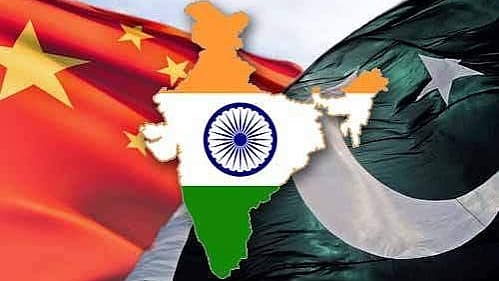
India has strongly objected to the activation of the commission. External Affairs Ministry spokesperson Randhir Jaiswal said India does not recognise the Pakistan-China boundary arrangement and stated that the new commission has no legal basis concerning territories that India considers part of Jammu and Kashmir and Ladakh. India has also maintained that it does not recognise the 1963 China-Pakistan Boundary Agreement, which concerns territory in the region claimed by India.The latest development is important because the Pakistan-China border is also linked to major trade and connectivity routes, including the Khunjerab Pass and the China-Pakistan Economic Corridor (CPEC). The new commission is intended to provide a permanent mechanism for issues such as boundary-marker maintenance, joint inspections, cross-border facilities, trade movement and handling incidents along the frontier. Pakistan and China describe the move as an important step in strengthening their long-standing bilateral partnership, while India continues to oppose arrangements involving territories it claims as its own.