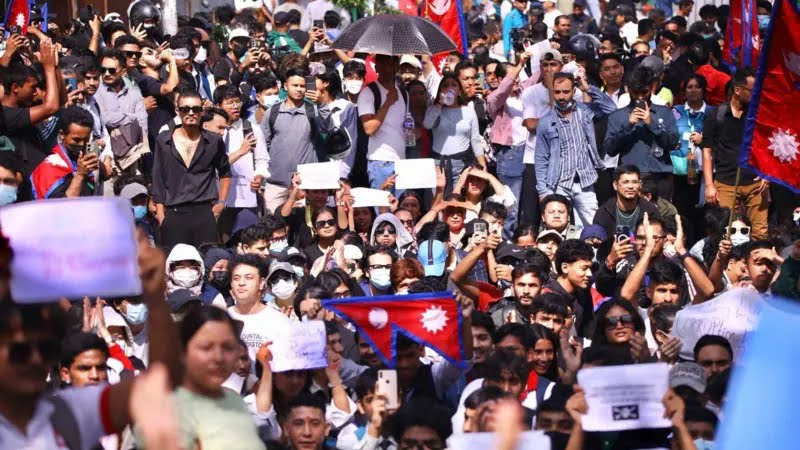
At least 19 individuals have lost their lives and numerous others have sustained injuries in Nepal following protests against political corruption and a government-imposed ban on social media, which resulted in confrontations between demonstrators and law enforcement. Thousands responded to a call from protesters identifying themselves as Generation Z, gathering near the parliament building in Kathmandu to express their discontent over the decision to prohibit platforms such as Facebook, X, and YouTube, as well as to voice broader grievances regarding the government. Prithvi Subba, Nepal’s Minister for Communication, informed the BBC that police were compelled to employ force, which included the use of water cannons, batons, and rubber bullets. The government has asserted that social media platforms require regulation to combat fake news, hate speech, and online fraud. However, popular platforms like Instagram boast millions of users in Nepal, who depend on them for entertainment, news, and business purposes. Protesters displayed placards bearing messages such as “enough is enough” and “end to corruption.”
Some participants expressed their opposition to what they perceive as the government’s authoritarian stance. A significant number of people in Nepal believe that corruption is widespread, with the government also facing backlash for its failure to fulfill promises aimed at addressing the nation’s enduring economic challenges. The Generation Z protest emphasizes that the focus should be on corruption rather than the social media ban. As the demonstration progressed into a restricted zone near the parliament, some protesters scaled the wall. Last week, authorities mandated the blocking of 26 social media platforms for not adhering to a deadline to register with Nepal’s Ministry of Communication and Information Technology. Since Friday, users have encountered challenges in accessing these platforms, although some have resorted to using VPNs to circumvent the ban. To date, two platforms have been reinstated after complying with the ministry’s registration requirements following the ban. The government of Nepal contends that it is not prohibiting social media but rather seeking to align them with Nepali law. Content opposing the ban has also gained traction on TikTok, which continues to operate in Nepal.