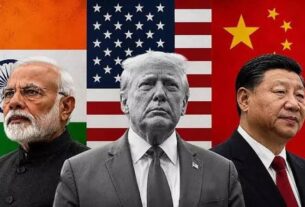

After the trade negotiations held in London, the capital of England, both the United States and China have agreed to ease export restrictions. Following his second inauguration as President of the United States, Trump imposed tariffs on various countries, including China. He levied a 34 percent tariff on China. Subsequently, China retaliated by imposing tariffs on the United States. This tariff conflict escalated to the point where the United States raised tariffs on China to 145 percent, while China increased tariffs on the United States to 125 percent. As a result, global stock markets were significantly affected.Finally, both countries entered into a mutual agreement to postpone tariffs for a period of 90 days. Following this, the leaders of the two nations decided to engage in compromise negotiations. As part of this, U.S. President Donald Trump and Chinese Premier Xi Jinping communicated via telephone last Thursday. In relation to this, President Trump stated, “Our conversation was very positive.” Furthermore, Trump mentioned that U.S. and Chinese officials would participate in trade negotiations in London. Accordingly, the trade discussions between the United States and China took place in the city of London on June 9 and 10.Following the conclusion of the discussions, U.S. Trade Secretary Howard Lutnick addressed reporters, stating, “The agreement reached last month in Geneva has contributed to reducing the retaliatory tariffs that have reached three digits. However, the Geneva agreement has faced setbacks due to China’s continued imposition of restrictions on significant mineral exports.
As a result, the Trump administration has imposed restrictions to prevent the export of software designed for circumventing these limitations, as well as aircraft and other goods.Following the conclusion of the discussions, U.S. Trade Secretary Howard Lutnick addressed reporters, stating, “The agreement reached last month in Geneva has contributed to reducing the retaliatory tariffs that have reached three digits. However, the Geneva agreement has faced setbacks due to China’s continued imposition of restrictions on significant mineral exports. As a result, the Trump administration has imposed restrictions to prevent the export of software designed for circumventing these limitations, as well as aircraft and other goods.The agreement reached in London currently eliminates certain aspects of the latest American export restrictions. We have established a framework to facilitate discussions at the presidential level between the two nations. We will return to speak with President Trump to ensure his endorsement of this. Similarly, they will return to confer with President Xi Jinping to secure his approval. If it is endorsed, we will proceed with the plan we have currently established.