

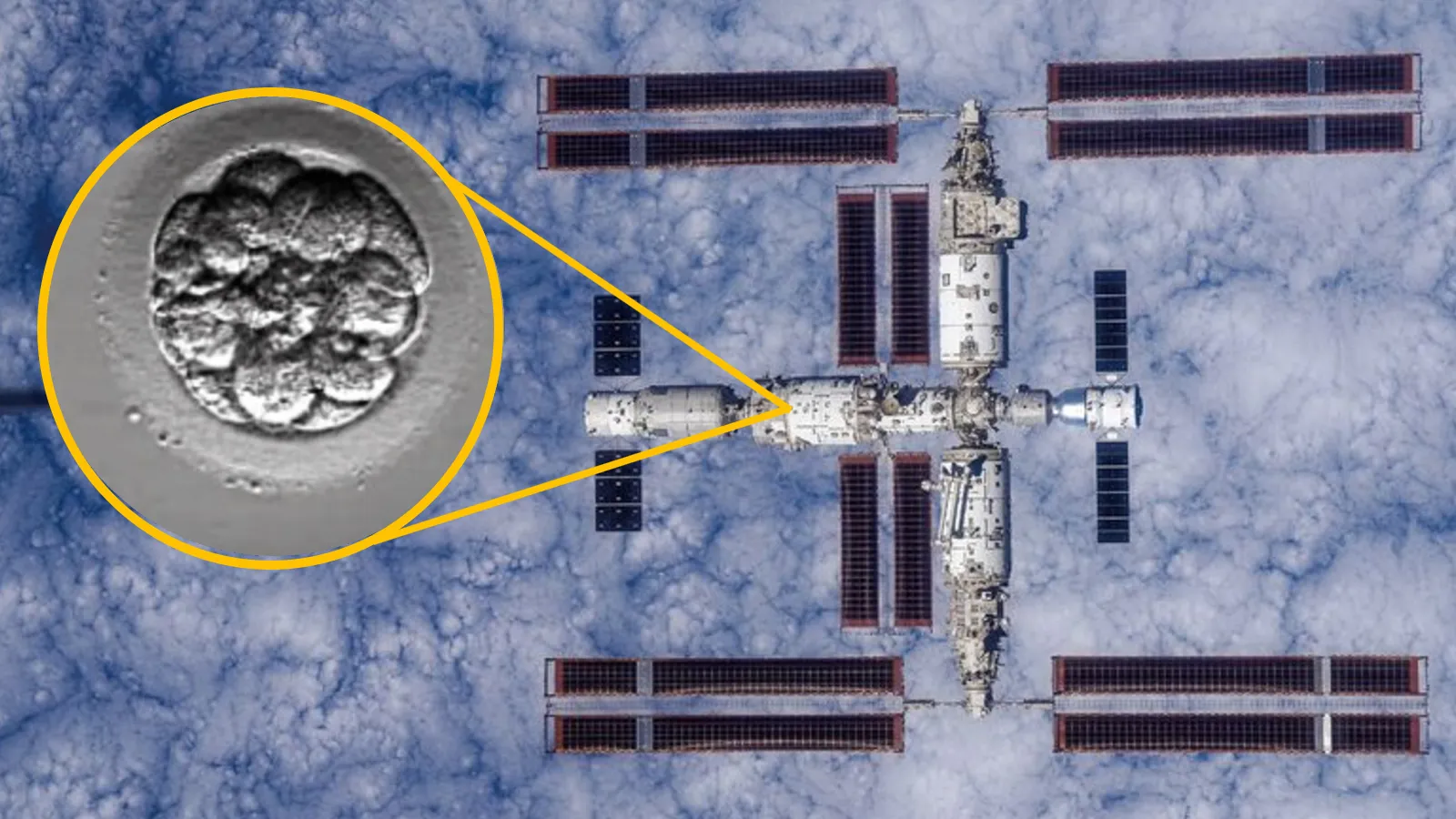
China has become the first country to send “human artificial embryos” into space to study how space conditions may affect human reproduction. Scientists hope the experiment will help them understand whether humans can one day live and reproduce on the Moon, Mars, and other planets. The artificial embryos arrived at China’s Tiangong Space Station on May 11 through the Tianzhou-10 cargo mission. The spacecraft also carried around 7 tons of supplies, including food, fuel, spacesuits, and scientific equipment for astronauts living on the station. These artificial embryos were created using living human stem cells. They can grow and divide like real embryos but cannot fully develop into babies. Because of this, scientists can study early human development with fewer ethical concerns.
Researchers used two different types of artificial embryos for the experiment. One model represents the stage when an embryo attaches itself to the wall of the uterus. The second model represents a later stage, when cells begin forming different layers that later develop into organs and body tissues. The embryos will grow in space for five days before being frozen and brought back to Earth for detailed study. At the same time, scientists in China are growing identical embryos on Earth to compare the results with those exposed to space conditions. Experts believe that understanding reproduction in space is important if humans plan to build permanent colonies beyond Earth in the future. However, many scientific challenges still remain before space reproduction can become possible.


