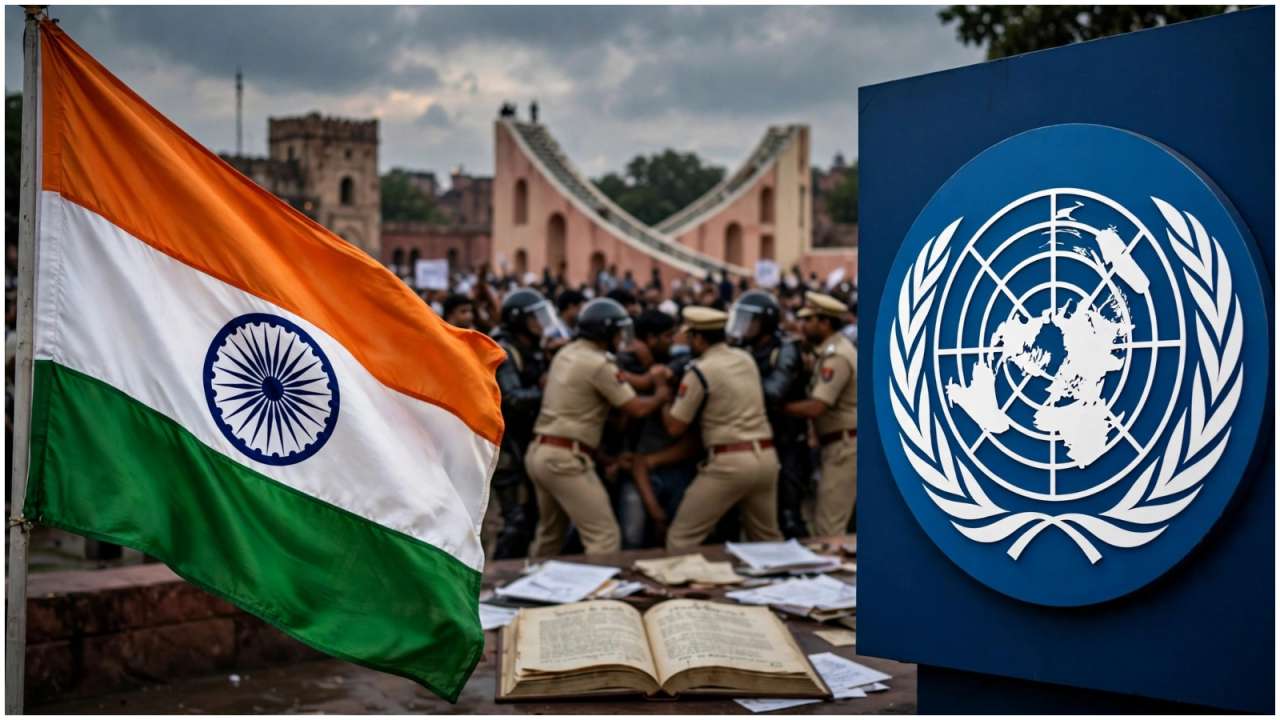
India has responded to criticism from the United Nations (UN) over its handling of protests and human rights issues. The Indian government has argued that human rights should not be used as a tool for political pressure or to target specific countries unfairly. India has called for a fair and balanced approach to human rights discussions, stressing that all countries should be treated equally.The issue highlights the ongoing international debate over freedom of speech, peaceful protests and government accountability. The United Nations regularly raises concerns about human rights, including restrictions on public demonstrations, the protection of minority communities and the treatment of protesters by law enforcement agencies. Governments are expected to maintain public order while respecting the fundamental rights of their citizens.
India is the world’s largest democracy, and its Constitution protects fundamental rights, including freedom of speech and peaceful assembly, subject to reasonable legal restrictions. The government has emphasised that every country has its own legal system and democratic processes for handling protests and maintaining law and order. At the same time, human rights organisations stress that peaceful protesters should be protected and that authorities must act according to the law.The disagreement reflects the broader challenge of balancing national sovereignty, public safety and individual freedoms. While India argues that human rights should not be applied selectively for political reasons, the UN and other international organisations continue to promote global human rights standards. Such discussions are important for encouraging transparency, protecting civil liberties and ensuring that governments remain accountable for their actions. However, the exact UN body involved and the specific criticism have not been identified in the original report.