
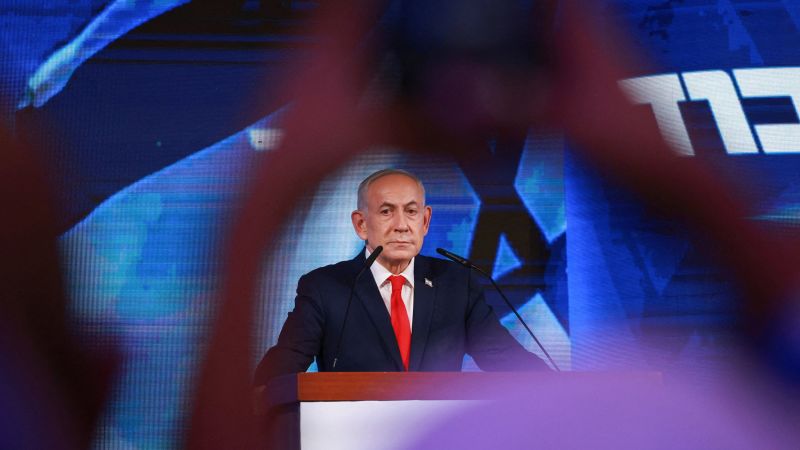
Israel’s opposition parties are making fresh efforts to remove Prime Minister Benjamin Netanyahu from power following the country’s inconclusive parliamentary elections held on October 27, 2026. Opposition leaders believe the election results have created an important opportunity to form a new government and end Netanyahu’s long political leadership.The election failed to give either Netanyahu’s ruling bloc or the opposition a clear parliamentary majority. According to the final reported results, Netanyahu’s right-wing bloc secured 53 seats in the 120-member Knesset, while the opposition bloc led by former military chief Gadi Eisenkot won 48 seats.Meanwhile, Arab-led political parties secured a combined 19 seats, giving them a potentially decisive role in determining who forms the next government. To form a government in Israel, a political bloc generally needs the support of at least 61 members in the 120-seat parliament. This means the opposition could potentially reach a majority if it secures sufficient support from Arab-led parties.However, forming such an alliance is proving difficult because opposition leaders have different political positions on working with Arab parties. Some leaders support cooperation, while others are reluctant to include them in a governing coalition.
Gadi Eisenkot and other opposition leaders have pledged to work together to establish a new government as quickly as possible and prevent the country from going through another election.Opposition politicians have also criticised Netanyahu over his handling of security issues, the wars involving Israel, domestic political divisions and corruption allegations. Netanyahu, however, continues to defend his leadership and has called for a broad national government under his leadership.The election has created a complicated political situation in Israel. Although Netanyahu’s bloc lost its parliamentary majority, his Likud party remains the largest individual party, and he could continue as caretaker prime minister while coalition negotiations take place.If the opposition successfully brings together enough lawmakers, Netanyahu could lose the prime minister’s position. However, if negotiations fail, Israel may face another parliamentary election.The outcome could have significant consequences for Israel’s domestic politics, relations with Arab communities, the Palestinian issue and the country’s ongoing security and foreign policy challenges.For now, the main political question is whether Gadi Eisenkot and other opposition leaders can overcome their differences and secure the parliamentary numbers needed to replace Netanyahu.