

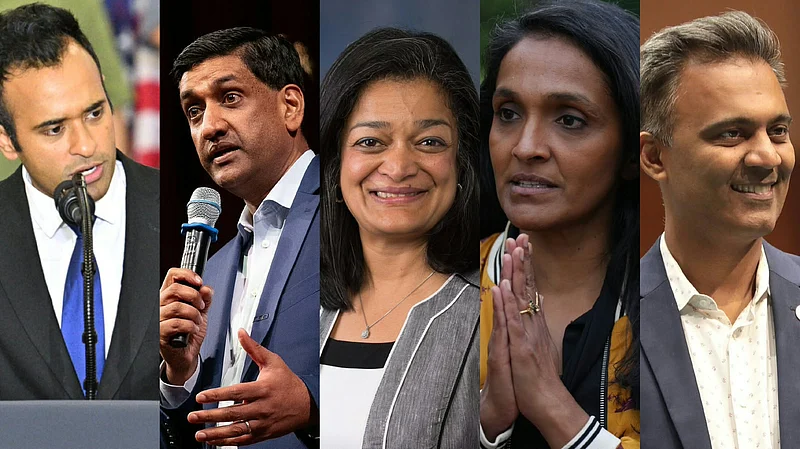
The 2026 US midterm elections have delivered mixed results for Indian-origin candidates, with several Indian-American politicians winning important elections while others suffered defeats. The results have highlighted the growing political influence of the Indian-American community in the United States.One of the major winners was Democrat Suhas Subramanyam, who secured re-election to the US House of Representatives from Virginia’s 10th Congressional District. He first made history in 2024 by becoming the first Indian-American elected to Congress from Virginia. His latest victory gives him another two-year term in the House.Another notable winner was Pia Dandiya, a Democratic candidate who won Florida’s 22nd Congressional District. A former high school principal, she defeated Republican candidate Casey Askar. Her victory marks another important achievement for Indian-American representation in US politics.Indian-origin politician Aruna Miller also secured another term as Maryland’s Lieutenant Governor. She contested alongside Democratic Governor Wes Moore and successfully retained her position. Miller previously made history in 2022 by becoming the first Indian-American woman elected as lieutenant governor of a US state.
However, the elections also brought a major disappointment for Republican Vivek Ramaswamy. Despite receiving strong support from President Donald Trump, he lost the Ohio gubernatorial election to Democratic candidate Amy Acton. Her victory also made her the first woman elected governor of Ohio.Several other Indian-origin politicians were involved in closely watched contests. Kerala-born Nithya Raman was in a competitive race for Los Angeles mayor against incumbent Karen Bass. Indian-American lawmakers Ro Khanna, Ami Bera and Pramila Jayapal were also among the prominent politicians seeking to retain their congressional positions.The results demonstrate that Indian-Americans are becoming increasingly influential in American politics, not only in congressional elections but also in state-level leadership positions.Their growing political representation could strengthen the community’s voice in discussions involving immigration, H-1B visas, education, technology, trade and India-US relations.The mixed results also show that Indian-American candidates are not politically united under a single party. Their electoral success depends on individual campaigns, voter support, political positions and the wider political climate in each state.


