
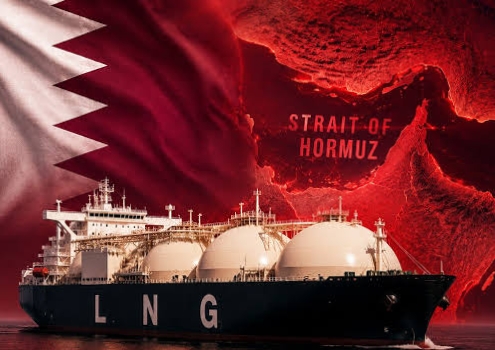
Qatar is facing a major economic setback as the ongoing disruption in the Strait of Hormuz has severely affected its liquefied natural gas (LNG) exports. According to recent data, Qatar’s LNG exports have fallen by around 96%, causing an estimated $24 billion loss in gas revenue.The impact has been particularly serious because Qatar depends heavily on the Strait of Hormuz to transport its LNG to international markets. During the past six months, Qatar exported only 18 LNG cargoes, compared with 509 cargoes during the same period last year, according to data from ICIS. Two Qatari LNG tankers have also come under attack, increasing concerns over the safety of commercial shipping in the region.Qatar is one of the world’s leading LNG suppliers and supplied roughly one-fifth of global LNG demand before the conflict. The International Energy Agency says about 93% of Qatar’s LNG exports normally pass through the Strait of Hormuz, making the country especially vulnerable to any prolonged disruption in the waterway. The crisis is also affecting global energy markets. Reduced Qatari supplies have tightened the international LNG market, while the United States has increased LNG exports to help replace some of the missing supply.
However, Europe is facing additional pressure because its gas storage levels are unusually low for this time of year. A colder-than-expected winter could therefore push gas prices significantly higher. The economic impact on Qatar could become even greater if shipping restrictions continue for a longer period. Reports indicate that Qatar has already started cutting government spending as the conflict puts pressure on its economy, while the country is also relying on its large financial reserves to manage the shock.Meanwhile, diplomatic efforts are continuing to reduce tensions and restore safe shipping through the Strait of Hormuz. Qatar’s Prime Minister recently visited Tehran as part of efforts to support negotiations, including proposals for a temporary shipping corridor and mine-clearing operations.The Strait of Hormuz is one of the world’s most important energy routes. Any prolonged disruption could affect not only Qatar’s economy but also global LNG supplies, European energy security and fuel prices in major Asian markets. The future of Qatar’s gas exports will largely depend on how quickly shipping conditions in the region return to normal.