
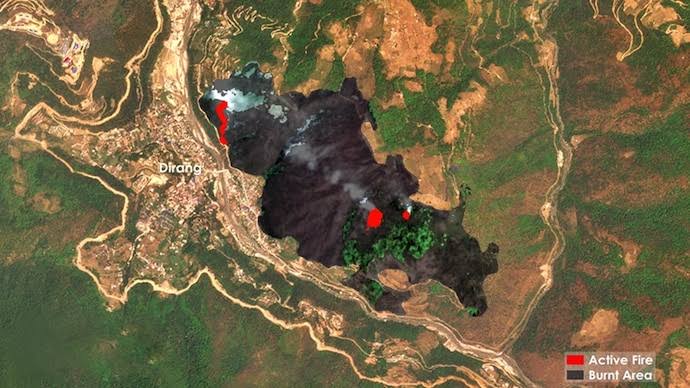
Manipur experienced a significant loss of 52,000 acres of forest area within a mere four years from 2021 to 2025, according to a study conducted by the space analytics firm Suhora.Utilizing high-resolution satellite imagery and sophisticated geospatial intelligence, the study documented critical changes in land cover across Manipur. It was estimated that 21,100 hectares [52,000 acres] of forest were lost during this four-year period, attributed to a mix of human activities and environmental factors, as stated in the report.The results also indicate a promising sign of recovery, with approximately 32 acres of land showing signs of vegetation regrowth. This suggests that with appropriate strategies, certain areas of Manipur’s forests may still have the potential to recover, the report noted.In addition to examining the alterations in Manipur’s forest regions, the Suhora study highlighted several factors contributing to the deforestation in the state adjacent to Myanmar. These factors include the rise of poppy cultivation, particularly in remote hilly areas, which has resulted in extensive forest clearing. A report based on satellite imagery from the Manipur Remote Sensing Applications Centre (MARSAC) indicated that the area dedicated to illegal opium poppy cultivation in Manipur decreased by 60 percent during the three-year crop cycle from 2021 to 2024.
No scientific research has been conducted, either by governmental or private entities, to explore the connection between deforestation and illegal opium farming. The causes of forest loss in Manipur are complex and deeply entrenched in both traditional and contemporary practices.Traditional shifting cultivation (jhum), which was once ecologically sustainable, has increasingly become harmful due to reduced fallow periods that do not provide the land sufficient time to regenerate, according to the study. Additionally, illegal logging and unsustainable collection of fuelwood, along with infrastructure development, not only directly contributes to deforestation but also heightens the risk of landslides. Furthermore, the impacts of climate change, such as rising temperatures, altered rainfall patterns, and increased vulnerability to wildfires and pest infestations, have rendered the forest ecosystems in Manipur even more susceptible.