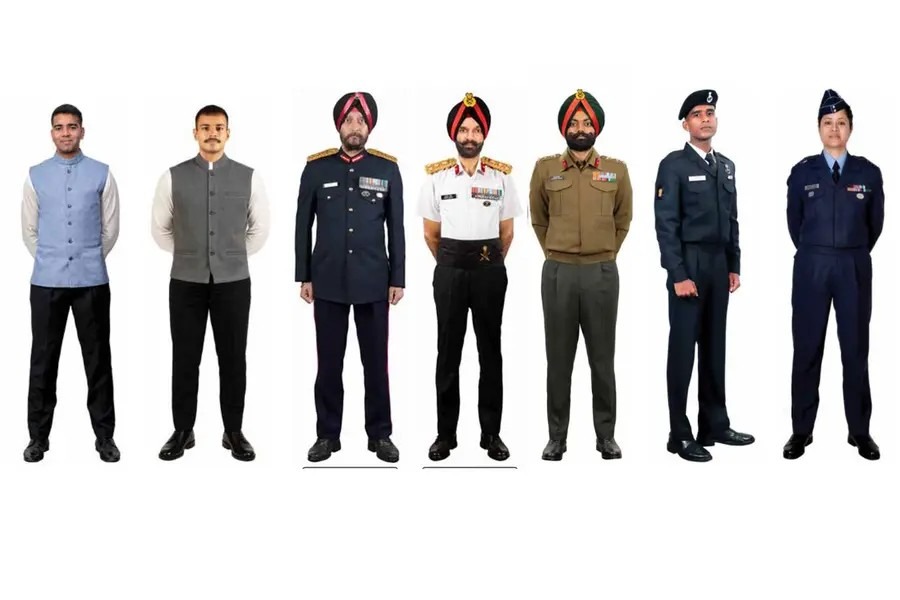
The Indian Army has introduced its new Army Uniforms–2026 policy, marking a major step towards modernising military dress regulations and strengthening India’s indigenous identity. The updated guidelines gradually remove several colonial-era practices, outdated terminology, and unnecessary uniform accessories while preserving the Army’s rich traditions and professionalism. According to the revised policy, the military uniform is more than just clothing. It represents discipline, unity, identity, and the values of the Indian Army. The new dress regulations have been released eight years after the previous edition and are designed to reflect modern Indian culture and national values. One of the biggest changes is the introduction of a common Uniform Numbering Scheme for the Indian Army, Navy, and Air Force. This new system aims to improve coordination between the three armed forces and make uniform identification easier.
The Army has retained four main categories of uniforms:
- Ceremonial Dress
- Working Dress
- Mess Dress
- Combat Dress
Each uniform will now have a unique dress number for better administration and easier reference. The updated regulations also introduce several important reforms to remove colonial-era influences. The traditional Bandi Jacket has been included as part of formal civil attire, while the pouch belt has been removed from Mess Dress Nos. 5 and 6. In another key change, carrying a sword by the Reviewing Officer has been made optional, and outdated terms such as “Royal” have been officially discontinued. The Indian Army said these changes are part of its long-term vision to modernise military traditions while maintaining dignity, functionality, and discipline. The reforms also reflect India’s independent identity and evolving national values. As part of the transition, older uniform patterns like Dress No. 3A will be gradually phased out and completely discontinued by June 30, 2029. The revised policy is expected to improve uniformity, practicality, and ease of implementation across the force. The new Army Uniforms–2026 document also focuses on improved functionality, clearer visual references, and gender-neutral representation to meet the needs of a modern military. Officials have emphasised that the updated dress regulations are not just about changing uniforms but also about reinforcing the Indian Army’s institutional identity, professionalism, and commitment to national values. The Army added that regular reviews under the Adjutant General’s Branch will ensure the policy continues to evolve with future operational requirements and organisational priorities.