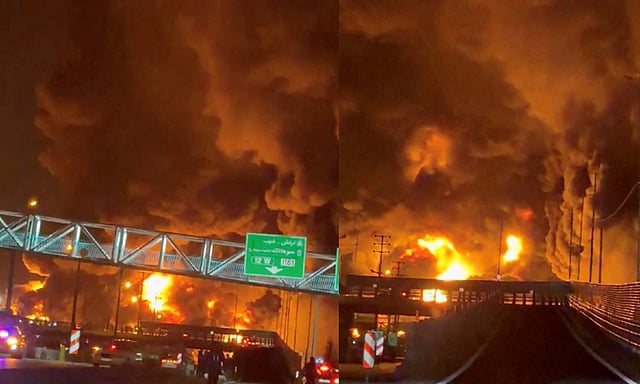
The conflict between United States, Israel, and Iran has intensified after the reported killing of Iran’s Supreme Leader Ali Khamenei on February 28 during a joint attack by US and Israeli forces. Following the incident, Iran launched retaliatory strikes targeting several Gulf countries, including United Arab Emirates, Saudi Arabia, Qatar, Bahrain, and Kuwait. In response, the United States and Israel have continued heavy military attacks on Iranian targets. Both Iran and Israel have been exchanging missile strikes, and since February 28, hundreds of attacks have reportedly taken place in Iran, leading to the deaths of around 1,300 people and forcing hundreds of thousands to flee their homes. Iran’s President Masoud Pezeshkian reportedly apologized to neighboring Gulf nations, but missile attacks on Bahrain, Qatar, Saudi Arabia, and the UAE have continued. Meanwhile, Israeli warplanes carried out an airstrike on the Shahr-e-Rey oil refinery located about 15 km south of Tehran, Iran’s capital. The attack caused massive explosions in the refinery’s fuel storage tanks, triggering a huge fire that sent flames and thick black smoke high into the sky and across the southern parts of the city. Nearly 19.5 million liters of fuel were destroyed in the blaze, and several workers and firefighters were injured. The refinery supplies about 6% of Iran’s daily petrol and diesel consumption, and the attack has severely affected fuel distribution in Tehran and nearby Alborz Province. Iranian authorities said that attacks also targeted three oil depots near Tehran, killing four drivers, though they claim fuel supply has not been completely disrupted. Israel stated that the strike targeted fuel depots supporting Iran’s military infrastructure, while Iran’s Islamic Revolutionary Guard Corps claimed it carried out a retaliatory strike on Israel’s Haifa Oil Refinery. Due to the escalating conflict, global crude oil prices have risen to about $92.40 per barrel in the international market.