
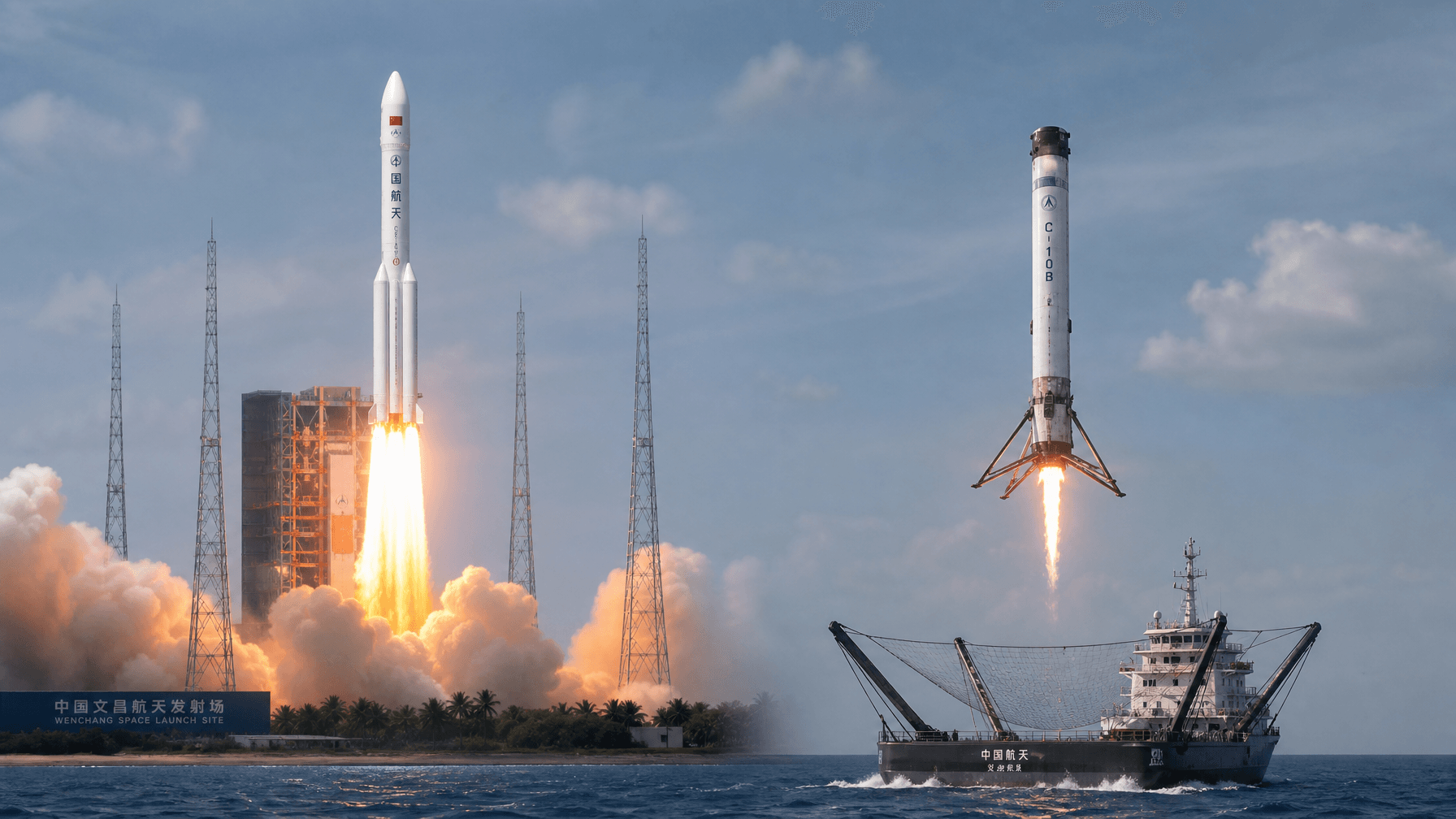
China has achieved another significant breakthrough in its lunar exploration and space program by successfully recovering the booster of its reusable Long March-10B rocket after launch. With this achievement, China has become the second country after the United States to master the technology of recovering and reusing rocket boosters. The advanced Long March-10B rocket was successfully launched from the Wenchang Space Launch Site in Hainan Province. Following the successful launch, China created history by safely recovering the rocket’s first-stage booster in the ocean. Approximately six minutes after liftoff, the booster returned to Earth in a controlled vertical descent and landed safely on a floating platform in the sea, where it was successfully retrieved by recovery teams.
The achievement demonstrates China’s growing capabilities in reusable rocket technology, following similar successes by American companies such as SpaceX and Blue Origin. Traditionally, rockets are designed for single use, with several components being destroyed during launch, significantly increasing mission costs.By recovering and reusing rocket boosters, space agencies and private companies can dramatically reduce the cost of satellite launches and space exploration missions. SpaceX pioneered this technology by successfully landing its Falcon 9 rocket booster in 2015, and the company now conducts around 150 Falcon 9 launches annually.Similarly, Blue Origin successfully landed its New Glenn rocket in 2025. China’s latest success with the Long March-10B marks another major step forward in the global race to develop cost-effective and reusable space transportation systems.